「われわれの愛する歴史と伝統の国、日本だ。」三島 由紀夫
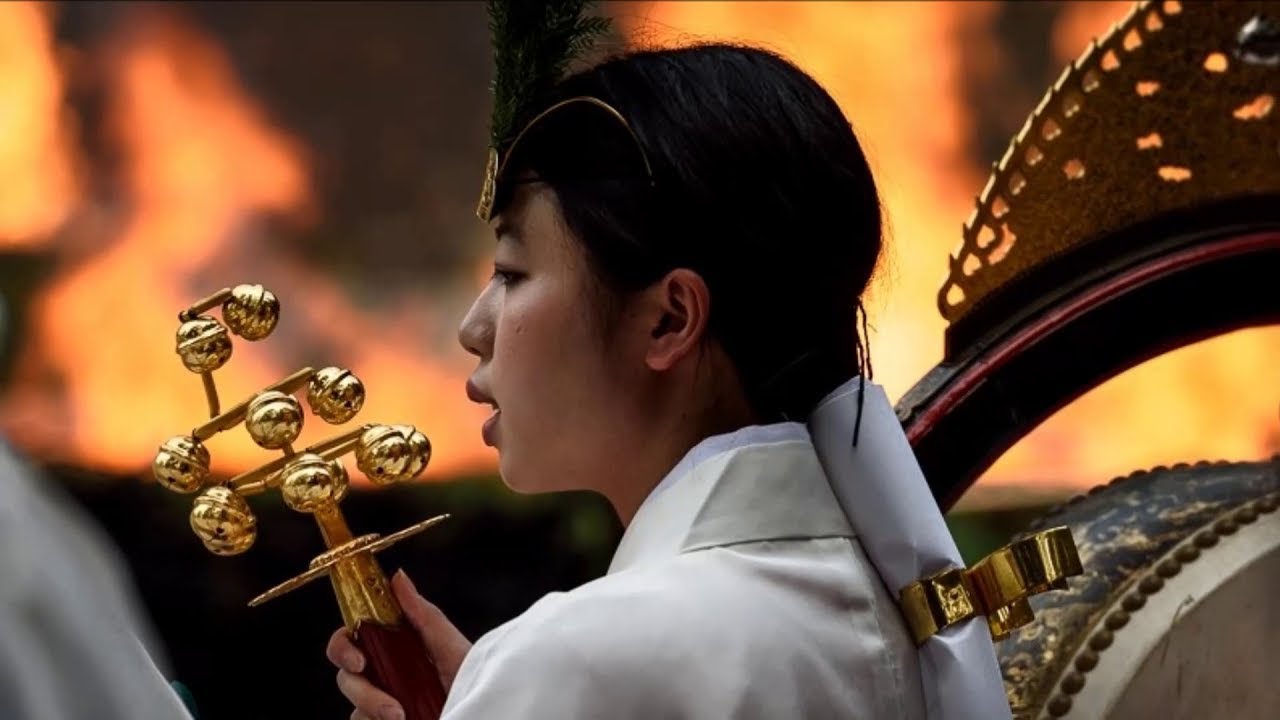
One young woman wearing red hakama (long divided trousers) or a red skirt, along with a white blouse or jacket and with her hair tied back with a decorative clasp of some kind. In ancient times it would appear that MIKO were very powerful religious and political figur in Japan.
Japanese chronicles of the 7th century says, occupied positions of power in the religious and political sphere in ANCIENT JAPAN, based upon their ability to receive instructions and messages from the God. After 1867 the MEIJI GOVERNMENT’s desire to create a form of state Shinto headed by the emperor meant that Shinto needed to be segregated from both Buddhism and folk-religious beliefs. As a result, official discourse increasingly repeated negative views of Miko and their institutions. In 1873, all spiritual practices performed by Miko priestess were banned.
The Miko of today have little in common with the powerful, shamanic, Miko of yesteryear. But, being unmarried is still a necessity. So I thought MARIYA TAKEUCHI’s song ‘SINGLE AGAIN’ suited them well and it may be a reminder of the historically powerful Miko era.
Miko priestesses was who are trained as healers and warriors. They mainly combat demonic threats, and are thus normally well versed in the occult and demonology. Each Miko was generally skilled in some variety of martial art or the use of a traditional Japanese weapon or any of the various Japanese Katana swords.Dark Priestess (Kuro Miko) sort of an evil counterpart to traditional Miko. Dark priestesses often serve as a renegade priest or evil sorcerer.
Like benevolent Miko, they are trained in similar spiritual arts and may have an intimate weapons knowledge. The Kuro Miko is often well versed in demonology and has a strong command of black magic,and wear masks while to hide her identity. While Kuro Miko (Dark Priestess) also wear chihaya, the colors tend to be darker (two often used color schemes are black and purple, or black and gold).
Historically, a Miko had served as an oracle, offering prophecy in the form of a dance. In real life, most modern Miko will help out with shrine functions such as cleaning, perform ceremonial dances based on the historical versions, offer fortunes (omikuji, those little slips of paper that tell you what your luck will be like)
THE GIRL WOULD GET HER INITIATION RITE TO BECOME A REAL SHAMAN.
The girl wore a white shroud as a symbol for the end of her previous life.The elders began chanting and after a while the girl started to shiver. The girl, who is shaking and half unconscious while the ritual continues, is asked which God (KAMI) she belongs to.As soon as she answered, the mentor throws a rice cake into her face and causing the girl to faint. The elders would bring the girl to a warm bed and keep her warm until she woke up. When the whole ordeal was over and the girl had woken up, she was permitted to wear a beautifully RED COLORED wedding dress and perform the corresponding tradition of the “WEDDING CEREMONY.”