
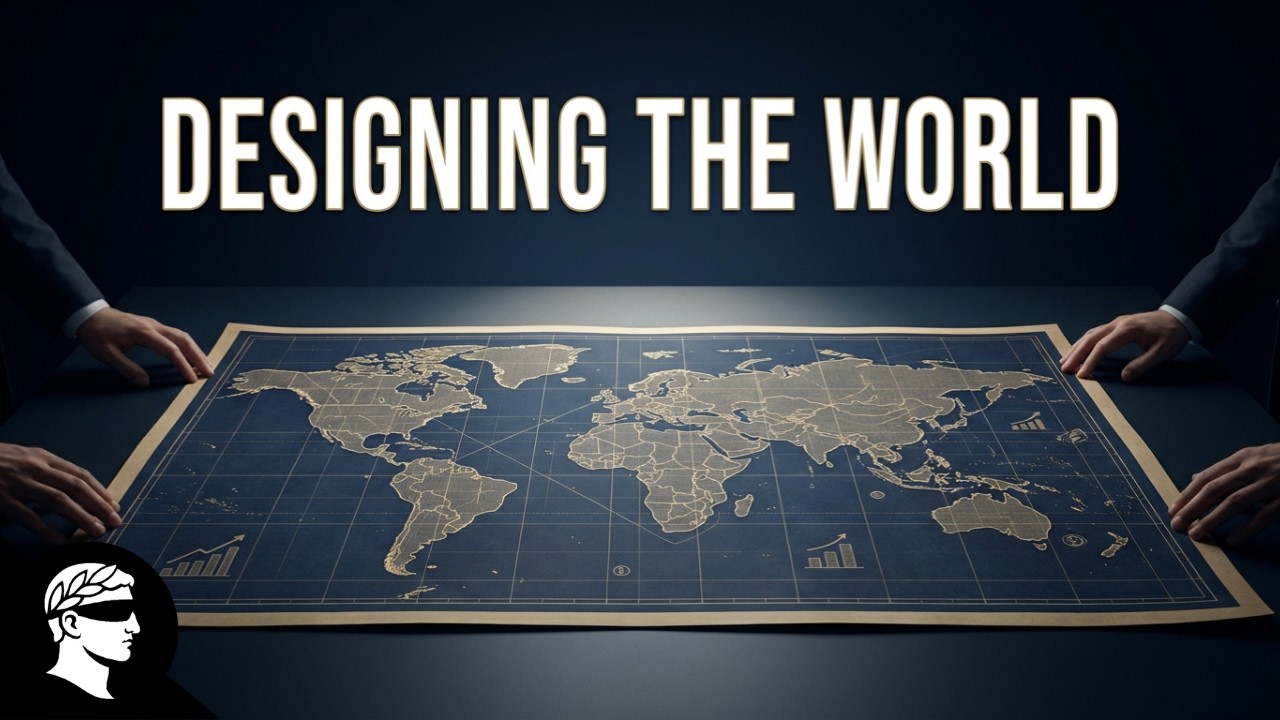
Why the Post – WWII World Order Was Built This Way
The world you live in wasn’t shaped by accident — it was engineered after catastrophe.
In this episode of The Financial Historian, we trace the hidden logic behind the post–World War II world order and explain why the global financial system was built this way. From the ruins of war to the creation of Bretton Woods, the dollar-centered system, and the quiet tradeoffs that prioritized stability over fairness, this video unpacks how money, power, and fear shaped the modern economic order. This isn’t a story about collapse — it’s a story about design. And once you understand that design, today’s inflation, debt cycles, and financial instability stop looking like random failures and start looking inevitable.
This video matters because the rules governing money, trade, and global power still shape your financial reality today — whether you notice them or not. Understanding how this system was constructed is a critical step toward real financial education, long-term financial freedom, and protecting real wealth in a world built on incentives rather than intentions.
Key Facts & Insights
• The post-WWII financial system was designed primarily to prevent economic chaos and political extremism, not to maximize fairness or efficiency.
• Bretton Woods created a dollar-anchored global order to stabilize currencies and rebuild trade after the Great Depression and World War II.
• The U.S. dollar replaced gold as the central pillar of the global financial system after 1971, shifting trust from physical backing to institutional credibility.
• The rise of the petrodollar helped sustain global demand for dollars even after the gold standard ended.
• Central banks evolved from passive custodians into active managers of markets, shaping modern inflation and asset prices.
• Debt expansion became a structural feature of the system rather than a temporary emergency tool.
• Many modern financial crises are not accidents — they are logical outcomes of incentives embedded decades ago.
#FinancialHistorian #FinancialEducation #EconomicHistory #MoneyAndPower #GlobalEconomy #WorldOrder #BrettonWoods #thefinancialhistorian
Further Reading
• The Global Minotaur by Yanis Varoufakis — a sharp narrative on how U.S. financial dominance evolved after Bretton Woods.
• Lords of Finance by Liaquat Ahamed — an essential account of how monetary decisions shaped the 20th century.
• The Price of Peace by Zachary D. Carter — a modern exploration of Keynes, power, and the architecture of global finance.
If this gave you a new perspective, hit subscribe. History has the answers—and I’ll show you where to look.