
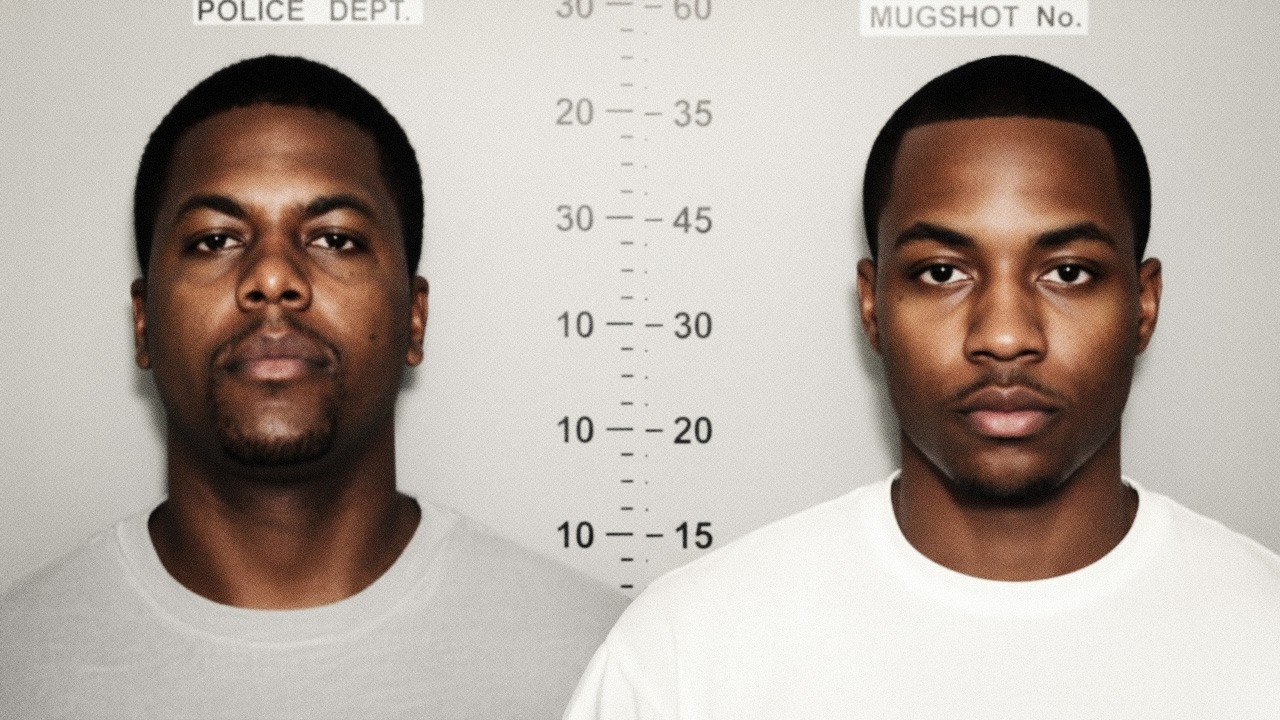
Against the Clock: Inside Three FBI Crime Files
In Virginia, a bank robbery explodes in violence. Put your hands up! Put your hands up! Spraying bullets from automatic weapons at anyone in their way, the robbers disappear. With no reliable witnesses, the police and the FBI have to decipher fragmented evidence to identify the shooters and then bring them to justice. The Despite what you see in the movies, most bank robbers come in quietly, pass a note, and slip away. They want cash, not bloodshed. But in Richmond, Virginia, a pair of gunmen entered a bank with their guns blazing. I’m Jim Kallstrom, former head of the FBI’s New York office. The raw violence of the crime shocked even the most seasoned investigators, who vowed to catch them before they struck again. Throughout the 1990s, Richmond, Virginia averaged about 10 bank robberies a year. Prior to 1997, not one of them was fatal. On the morning of January 30th, 1997, the employees of a small bank on the east end of the city began the day’s business. 23-year-old Christine Edwards, one of the bank’s tellers, arrived for work. Colleague 21 year old Tracy Freeman was already there. Allison Davis, a customer service representative, and Richard Hartman, the bank security guard, also began their day. Steven Reed, a regular customer, arrived shortly thereafter. He entered the bank as the tellers finished setting up and was greeted by Hartman. No one saw the two men slipping in the bank’s rear door. First National Bank, how may I help you? Oh, yes. Uh-huh. When the men struck, they did so swiftly and without mercy. 80 yards away, Richmond police officers Michael Webb and Dave Martin were at a convenience store getting coffee for their morning shift. Hey, hey, hey, hey! Something’s happening to the bank. Where? Gunshots in the bank. The bank? The bank right up the street. Let’s get him to the back up. As the officers responded, Richmond dispatch ordered backup units to the scene. 16 respond. 929, 116. At the rear of the bank, the officers spotted a security guard lying in the parking lot. Officer Martin guarded the front as Webb went to check on the guard. He was still alive. Barely. Webb called for an ambulance. 119, we need an EMT now. Then, two armed men emerged from the bank. Stop! 119.10.5 to 119.W, shot. Going all in. Shots were being fired, United. Webb emptied his clip. The officer knew he was pinned down and outgunned. They stopped shooting, I stopped shooting, and I just knew these two guys. We’re gonna come each side of the vehicle after me. I changed magazines and sat there and waited for a couple of seconds. But the gunman never came for him. Officer Martin left his position to back up Webb, but the assailant surprised him. With only a service weapon, Martin was outgunned, which allowed the robbers to get away from him. All the officer could do was report their position as they escaped across the cemetery. Got a black male running with black jacket toward Divertown Road. Two men. The Richmond officer saw a cloud of red dye, the sign that the gunman had stolen a bundle of money containing a timed dye pack. The men leapt over the next wall, and the officer lost sight of them. The dispatcher forwarded the information to the Henrico County Police Department. Officer Martin searched the neighborhood, knowing two men with automatic weapons could be around any corner, but found no sign of the suspect. A Henrico patrolman arrived on the scene. EMTs arrived. They tended to the wounded guard outside. Richmond police entered the building. Police, everybody down! Stay where you are! Looking for any other gunmen that might still be inside and to check the condition of the other employees. I see one going down over here on the left. They found two tellers. Both shot. It’s okay. Come on out, man. Come on. Everything’s fine. Allison Davis had taken cover. Come on. Come with me. Is she okay? Everything’s okay. She was not injured, but paralyzed with fear and taken to the hospital for evaluation. After clearing the bank, the officers felt it was safe to let the EMTs care for the wounded. Retailer Christine Edwards, it was too late. It’s gone! The A squad and forensics respond to the additional services and supervisors for the car seat. Okay, tell me where it hurts. Tracy Freeman in severe shock and bleeding heavily was stabilized and rushed to the hospital along with Richard Hartman, the security guard. At the Richmond Police Homicide Division, Detective Tom Leonard was disturbed by the robbers brutality. This was our most violent bank robbery that we can remember in our history. So our fear was they were in the neighborhood and we needed to get them off the streets. Leonard headed to the bank. Officers collected items dropped by the robbers when they fled. Including a Lorsen 380 semi-automatic handgun and the clip to a Tech 9, another semi-automatic weapon. A canine officer with a tracking dog began searching for the suspects. The dog followed a scent through the cemetery. On Art Avenue, the dog lost the trail. Enrico and Richmond police canvassed the neighborhood, asking the residents if they had seen any strange men fleeing the area. But no one saw anything suspicious. Detective Leonard arrived at the crime scene with an evidence technician. We immediately shut down that bank, and the only people that were inside the bank was myself and forensic people. Through the bank looking for forensic evidence that we could pick up and look at. We found a lot of spent shell casings which were fired. We had some that were unfired. Those shells were 9mm, likely used in the Tech 9. Behind the teller’s counter, investigators found a backpack apparently left by the robbers. Inside was a piece of green tablecloth, a bottle of charcoal lighter fluid, a box of matches, and a note reading, Please wait five minutes. We couldn’t figure out what that was all about. On the surface of the teller’s counter, investigators spotted several boot prints. They preserved each print with tape, which they would later compare with footwear collected from potential suspects. Because the bank was federally insured, police called in FBI Special Agent Wayne Waddell from the Richmond field office. At the bank, he and Detective Leonard checked a videotape that had recorded several surveillance cameras simultaneously. But there was a problem. Something caused the film, in our opinion, to not be working correctly. It went one camera to another camera to another camera, and you were getting different angles from the front door, the rear door, and from different teller positions. They would need to make still photos from the individual frames to get any useful details. Special Agent Eduardo Alford joined the investigation. He knew the FBI would not stop until the gunmen were captured. I’m sure if you talk to every person that was involved in this investigation, they would tell you the same thing. They wanted to stay on this case around the clock, which essentially is what happened. Evidence collection at the bank lasted for hours. Later on in the evening at around 5.30 or 6, we received word that Henrico County had received a report of a break-in. I went over to the break-in site. It was on Art Avenue across from the cemetery, not far from where the K-9 unit had lost the trail of the suspects. We didn’t know if it had anything to do with the bank robbery or not. A young woman that lived there with her father found the front door had been knocked open and went in the house and discovered a lot of items that appeared knocked around or perhaps taken. When Special Agent Waddell went inside, a Henrico officer pointed out a hole in the ceiling. It appeared someone had stepped through from above. They feared someone might be hiding in the attic. No one was there. They searched for evidence. Investigators found a pair of boots. They also found a backpack and a coat. Inside was another note reading, Please wait five minutes. They also found another green tablecloth. Red dye like that used in bank dye packs covered many of the items. So we absolutely felt that there was a connection between the house break-in and the bank robbery. But they didn’t know how the two crimes were related. We had no idea why the bank robbers would come to that house. Was it an inopportune moment? Did they know someone there? Was there something that drew them there? Was it happenstance? I had no idea. We interviewed the owner and his daughter and the daughter’s boyfriend. And you interview these people because what are these bank robbers, what are these suspects doing in your house? And we’re trying to find, is there a link or is there not a link? The residents were equally confused. They reported that whoever broke into the house stole some men’s clothing, suits and jackets. During questioning, the boyfriend acted nervous and claimed he had no information to add. At the hospital, a Richmond detective sought out the wounded victims who could provide eyewitness accounts. But he was unable to see anyone. The two wounded survivors were still in surgery and could not be interviewed. Allison Davis, the customer representative who had escaped injury under her desk, was so distraught she had to be heavily sedated. Stephen Reed, the customer inside the bank, had been grazed by a bullet and had come to the emergency room on his own. But he was also of no help. He had Alzheimer’s disease and could not remember any useful information. By the end of that first day, we still had nothing more than what we had to begin with. So we knew there was going to be a ways to go. It was going to be a tough case. In Richmond, Virginia, two armed bank robbers escaped with $10,000 cash, leaving two employees wounded and 23-year-old teller Christine Edwards dead. The community was stunned, as was Assistant U.S. Attorney Nicholas Altamare. This girl was an angel. And these guys, they just walked into the bank without a word spoken and shot her dead. It’s sick. Determined to find her killers, Richmond homicide detective Tom Leonard and FBI Special Agent Wayne Waddell had to pursue the case without the benefit of eyewitness accounts. The problem with the employees and the customer in the bank is they were all traumatized. We actually could not talk to any of them for several, several days. The detective tried to interview Allison Davis, the customer representative who had taken cover under her desk and escaped injury. But she was too traumatized by the ordeal. Hospital staff had to sedate her. She was unable to speak. There were no witnesses available to tell investigators what actually happened inside the bank. All they had to understand this events was a flawed videotape of the surveillance cameras, according to detective Tom Leonard. That really caused us a problem trying to piece things together because we’re missing little bits and pieces of the video, so you didn’t get to see the whole robbery occur like you normally would. Working with still photos captured from the surveillance video, and records of the physical evidence recovered from the bank, the investigators pieced the crime together moment by moment. It was a complex series of events, all taking place in a matter of seconds. You could see where the bank had obviously opened, but the only people were inside were the security guard, the bank representatives, and one customer. The customer was standing there at the walkway area where you go through your little lines talking to the security guard. The lead gunman headed straight for the teller’s counter. The first guy bypassed the security guard without even looking at him, without even noticing him. In our minds, we realized the front guy was not worried about the security guard. He knew that the second guy was going to take him out. In the photos, investigators saw the second robber pointing the Tech-9 at the guard. The first robber reached the counter and shot both tellers, killing one. Ballistics testing showed both were shot with a Lorsen .380 recovered outside the bank. The bullet hole behind the customer representative’s desk showed the gunman turned and fired at her, but the shot missed. Investigators noted the unfired 9mm rounds found on the floor. This suggested the Tech-9 had likely jammed and the gunman ejected rounds trying to clear it. The photos revealed there was a brief standoff while the second robber tried to clear his Tech-9, the first had… …to shoot the guard with a Lorsen. But that gun malfunctioned too. The Lorsen 380, recovered outside the bank, was found with a jammed cartridge. When the guns jammed, the customer, Stephen Reed, fled, followed by Richard Hartman, the guard. Unable to clear the Lorsen, the lead gunman pulled an AR-15 assault rifle and followed them. Spent shell casings and bullet strikes found outside supported witness statements as to what had happened next in the bank’s drive-thru. One witness saw a gunman chasing the fleeing customer. He grazed his arm. The guard tried his best to stomp the killer. But was struck by multiple rounds. The gunman returned inside. Hartman was still alive. The witness watched as he entered the rear of the bank. He pulls open that back door, the wooden door. Investigators realized Hartman had risked his life trying to draw the robbers out. Robbers loaded a backpack with money, including one bundle that contained a dye pack. A guard approached, fired, but missed. Another witness saw the guard flee the rear of the bank. The lead gunman pursued him into the parking lot. And fired. The final shot to the temple permanently blinded Richard Hartman. Moments later, officers Webb and Martin found him there. Agent Waddell and Detective Leonard now had a clear account of the crime. Since the robbers came into the bank shooting, investigators believed their intent was to murder everyone to eliminate all witnesses at the bank. The contents of the robbers’ backpack revealed a plan to minimize witnesses on the outside. The tablecloths and the note were, I think, to be put over the doors to ward off anyone coming up to the bank. Give us five minutes, we’re still cleaning. Give us five minutes, we’re not ready to open up yet. Something like that. With the bank to themselves, the robbers could take their time. The piece of evidence that disturbed investigators the most was the lighter fluid. They believe the robbers were planning to use it to set the bank on fire as they left. Investigators knew they were dealing with especially violent criminals who acted with no remorse. We needed to get them off the streets. Our fear was these people were going to get out into the community and commit some more murders. Because they’d already been bowling up to… to come into the bank and start shooting people. We’d have to gunfight with these people to try to catch them later. And the criminals were well-armed. They still had an AR-15, the civilian version of the military’s assault rifle, and a Tech-9, a 9mm semi-automatic pistol. The one weapon recovered, the murder weapon, was a Lorsen 380 semi-automatic. A records check revealed it had been stolen weeks earlier. Investigators released details of the guns to the press and asked for the public’s help in tracking down the weapons. It worked, according to Assistant U.S. Attorney Nicholas Altamari. We got lucky. We got very lucky. There was a person who was out there that overheard A woman that she worked with say that she thought that her husband sold those weapons. The FBI and the Richmond PD followed up on that lead and in fact did locate a gentleman who was a legitimate and licensed gun dealer. At first, the dealer was reluctant to talk to authorities. He didn’t want to incriminate himself by admitting that he might have sold weapons used in a murder. After agents assured him he could not be held liable since the guns were sold legally, he admitted he had sold a Tech-9 and an AR-15 a few days before the robbery. Yeah, I got it all right here. He located the ATF forms filled out by the purchaser. Investigators now had a name to move on. The gun dealer told us that he had sold the weapons to Jermaine Sims. And we got hold of all of our, all of the units, all the guys working the case. Everybody was out trying to locate him. They finally ascertained that Sims was out of town. While the search for Sims continued, investigators kept following their only other promising lead, the Art Avenue house that the robbers had broken into. We started checking everything we could find out about the owner and his family. The girl that lived there had a boyfriend. We started checking him out. So we started from scratch with just basically an investigation on every person in the house. The boyfriend, who had acted nervous during interviews, consented to a polygraph test. The polygraph examiner asked questions about the robbery and murder, while Special Agent Waddell observed. After an hour of questioning, the polygraph results were inconclusive. The boyfriend could not be eliminated as a suspect. Special Agent Waddell knew he needed to re-examine the house and went back with a search warrant. This time, he returned with an FBI evidence response team. He was determined that a more thorough search would reveal a connection between the bank robbery and the break-in. The ERT technicians scoured the attic. Behind a wallboard, they found a Tech-9 semi-automatic pistol and an AR-15 assault rifle, precisely the type of guns used in the crime. They were still loaded, and their serial numbers were intact. Special Agent Waddell proceeded to check if these were the same guns purchased by Jermaine Sims. We wanted to verify that they were in fact the weapons that had been bought from the gun dealer and used in the bank robbery. So we called back to the office, we read off the serial number, make and model of these weapons, and they were compared to the ATF firearms form. They were the same weapons. A ballistics expert compared slugs recovered from the bank to slugs fired from the recovered AR-15. They matched connecting that weapon to the fatal bank robbery. It seems certain that Jermaine Sims had indeed bought the weapons used in the robbery and murder. Now, the FBI and Richmond police needed to find him. In Richmond, federal agents determined two weapons used in a deadly bank robbery were purchased by a man named Jermaine Sims. Agents could not find Sims, but a background check revealed he was receiving government assistance. They followed up on that lead. At the social services office, an administrator confirmed that Sims regularly came in to pick up food stamps. She flagged his name on their computers and agreed to page the FBI the next time the suspect showed up. Agents went to the address listed on the ATF form and spoke to Sims’ mother. She hadn’t seen her son since she kicked him out the previous week. Days later, Richmond agents received a page from the social services agency. Sims was there. It’s just a matter of pulling your check up. The administrator stalled Sims until the agents arrived. They hoped he didn’t suspect anything. When the agents arrived, the suspects seemed calm. Excuse me, sir. Special Agents FBI. I need you to come with me. They asked Sims to come in for questioning. Reluctantly, he agreed. They took him to a nearby police station where investigators tried to get him to talk about the guns. But interviewing the suspect was no easy task, according to Assistant U.S. Attorney Nicholas Altamari. Sims was a difficult… person to deal with. He was a person who was filled with hate and hostility. He didn’t want to be there. He didn’t want to certainly cooperate with us. We were dragging bits and bits of information out of him and he was really only providing us information that we already knew. We were having a lot of trouble bringing him to the table, so to speak. Sims denied any involvement in the crime, stating he was at his girlfriend’s apartment at the time of the robbery. Over several hours, Altamari kept pressuring him until finally Sims admitted he had bought the AR-15 and the Tech-9 with the intent to sell them later for a profit. He said he stashed the weapons at a friend’s house, a man named Ra, but claimed he couldn’t remember the address. Instead, he gave directions. The interview continued while Special Agent Wayne Waddell tried to confirm Sim’s story. Sims told us where this house was located and described the house to us. We went to the locations. We could not find the house. Determined, Altamari confronted Sims with his deception. Do you think you’re dealing with a bunch of amateurs here? But Sims maintained his story that he still knew nothing about the bank robbery. You’ve already told me that. By then, authorities had located Sims’ girlfriend, who supported his alibi. But investigators had strong evidence connecting him to the crime. You’re going to jail. He was informed that he was under arrest for bank robbery. There’s nothing like the silence of a jail cell to focus somebody on their problem. And he had a huge problem. He had his name… On the title to these weapons that were used in this robbery. And we thought that if we gave him a little time to think for himself, that he would eventually come to the conclusion that it was in his best interest to cooperate with us. After a week of incarceration and repeated interviews, Sims decided to talk. Tell me about the guns. He said after he bought the guns, he left them with two friends, Rasheed Jones and LaFawn Bobbitt. He still denied having any involvement in the robbery, but investigators continued to work on him. He admitted that, um, that, of course, he knew that they had robbed the bank. He still claimed that he was surprised that they had used his guns to do it and expressed his outrage that they would have done this to him and gotten him out. Sims said that after the robbery, Bobbitt and Jones came to his apartment wearing clothes he had never seen them in before. They told him about the botched robbery, the gunfight, and their escape. They explained that they had broken into the house on Art Avenue, choosing it at random. They stole some clothes and stashed their guns behind the wallboard in the attic. As they were leaving, Jones accidentally stepped through the ceiling. They then slipped out, avoiding the patrolling officers. They had the money with them, but it was stained red from the dye pack. Police records reveal that LaFawn Bobbitt had 11 prior convictions and was free on bond from charges related to grand theft auto. Rasheed Jones had seven prior convictions, including grand larceny, and was on parole. Investigators reduced the charge against Sims from bank robbery to conspiracy. Now. With the identity of the killers in hand, the real chase could begin. After a 1997 bank heist that left one teller dead, Richmond, Virginia authorities believed they had identified the gunman as LaFawn Bobbitt and Rasheed Jones. They had no idea where to look for Jones, but they did set up surveillance at Bobbitt’s last known address. Assistant U.S. Attorney Ken Melson was determined to apprehend these men as quickly as possible. We had to get these two cold-blooded killers off the street as soon as we can, so we would eliminate the possibility that they could do the same thing again and someone else would get killed. And yet we had a lot of work to do collecting the physical evidence, getting it analyzed by the lab. They needed more time to build the federal case, but could not afford to have two killers on the loose. A prosecutor’s office in Henrico County to charge Bobbitt with the burglary, the breaking and entering of the Art Avenue address. With respect to Jones, he was in violation of his parole, so we got a warrant for a parole violation. Special Agent Wayne Waddell received the go-ahead to bring in the fugitives on those charges. We had two agents watching LaFawn Bobbitt’s house. The two agents were Paul Messing and Eddie Alford. And we finally get authorization to arrest LaFawn Bobbitt. I get hold of Messing and Alford. They tell me that Bobbitt has just left his house. The agent told the surveillance team to follow Bobbitt, then headed off to back them up. The agents followed the suspect into town where he boarded a bus. They kept in contact with Special Agent Waddell, updating him on their location. Soon, Waddell caught up. They decided to arrest Bobbitt at the next bus stop. Bus is right in front of me. All right, 10-4, I’m getting ready to come around you right now. Waddell pulled around front to get into position. The other agents pulled in behind. When the bus stopped, the agents were ready. LaFawn Bobbitt, you’re under arrest for parole violation. Put your hands up. Within moments, suspect LaFawn Bobbitt was in custody. Investigators executed a search warrant on Bobbitt’s home. In his bedroom, they discovered a manual for a .380 Lorsen pistol, the same model used in the murder. They also found several spent .380 shells. For FBI Special Agent Eduardo Alford, this circumstantial evidence suggested it was Bobbitt who fired the fatal shot. It was actually the weapon that one of the tellers was killed with. Finding that shell casing was very helpful as far as determining which one of the subjects or suspects might have… had possession of this weapon on this particular day. The FBI lab identified Bobbitt’s fingerprints on items left at the bank by the robbers. The first evidence directly linking him to the crime. Technicians at the FBI’s Question Documents Unit compared the boot impressions found at the bank with boots recovered from the Art Avenue house and from Bobbitt’s home. One of the Leighton footwear impressions was consistent with a boot that was left at the Art Avenue address. Another Leighton was found to be consistent with a boot found at Bobbitt’s house at a later search. And so that circumstantially, again, not conclusively, but circumstantially placed Bobbitt and his apparel in that bank. The boots found in the attic likely belong to Bobbitt’s alleged partner in the crime, Rasheed Jones. Federal prosecutors now charge LaFaune Bobbitt with the bank robbery and murder, but investigators still needed to find Rasheed Jones. Three months after the crime, authorities received a tip from a store clerk. He reported a customer had attempted to pay with dye-stained bills. The clerk refused to accept them. Mr. Jones had been in that particular area in the south end of Richmond trying to exchange some of this money. So the Fugitive Task Force pieced that information together and they were really able to hone in on that particular area based on the proximity of this particular merchant’s store. The FBI focused on that neighborhood, working all of their contacts. The effort paid off. The information that came in was from just a reliable source of information. Somebody that was aware of this crime and knew Mr. Jones and was able to pinpoint a location of where he was hiding. Jones was staying in a run-down apartment building frequented by transients. Agents were able to obtain the cooperation of a man living there. The arrest was planned for 5 a.m., when Jones would likely be asleep. They called the location and spoke to their contact inside. He said Jones was there, sleeping, and he had a gun. The contact also warned there were other people in the apartment, and most of the lights did not work. As the arrest team approached the building, they went through a final briefing, reviewing photos of their target. They anticipated a dangerous confrontation. Jones was armed, desperate, and surrounded by innocent bystanders. In 1997, the Richmond Fugitive Task Force SWAT unit closed in on Rasheed Jones, suspected of bank robbery and murder. They’d received a tip that Jones was hiding out in an apartment. From their contact inside, they learned Jones was armed and most of the lights did not work. There were several innocent people in the apartment. The building was dark and foreign, complicating an already difficult challenge in which SWAT had to take down an armed fugitive while protecting innocent bystanders. The team decided to sneak up on Jones silently. They hoped he had not been tipped off. When they reached the target apartment, an agent phoned their contact inside. FBI, we’re here. The contact was escorted out of the building. When they made it to the room where Jones was said to be sleeping, he was gone. So was his gun. Tension mounted as SWAT began searching the rest of the apartment. Get your hands up, man. Get your hands up. Come on. Get up. Get up. They found and removed two other residents. Every room was cleared. Except one. A bathroom. Jones, I know you’re in there. Come out. Put your hands up, Jones. That’s him, let’s go. To the team’s relief, Jones was unarmed and surrendered without a fight. The manhunt was over. Agent searched for his weapon. They discovered it in a closet, its firing pin broken. Had the gun been functional, the arrest might not have gone so smoothly. Jones was immediately charged with probation violation and later for the bank robbery. On February 25th, 1998, the trial of Rasheed Jones and LaFawn Bobbitt began. But it would not be an easy case. Assistant U.S. Attorney Ken Melson and his prosecution team were unable to use any of the people in the bank as witnesses. None of them could really testify for us because the guard was blind as a result of being wounded. One teller was dead. Another one had never had the opportunity to even turn around to see anything. And a third employee was unable to testify because she didn’t see anything. She was under a desk during most of the robbery. Nelson found a way to deal with the lack of witnesses by commissioning a digital recreation of the crime. We had to stand in for them digitally and show the jury what happened inside that bank. We were the witness’s voice to the jury during the trial, so that they could be involved and experience the agony of the victims, experience the moment of the bank robbery. And that would give them not only the true feeling of what went on in the bank, but the true carnage and intent of the defendants. After hearing six days of testimony, the jury convicted both gunmen on all charges. Assistant U.S. Attorney Nicholas Altamari. In the trial, they sat there smug as all get out. And it wasn’t until after they were convicted that you could really see them start to worry, because then it was about them. Then they were worried. Bobbitt and Jones were each sentenced to life in prison without the possibility of parole. Jermaine Sims, who purchased two of the weapons used in the robbery, was convicted on conspiracy, accessory before the fact of murder, and several weapons violations. He, too, was sentenced to life without the possibility of parole. As the victims and their families continue to heal… They in the city of Richmond know that Jones, Bobbitt, and Sims will never be a threat to anyone again. Two deadly fugitives are on the run from justice. Authorities follow an electronic trail and chase the escaped convict and his partner from state to state. The suspects are moving fast. determined to avoid capture. The police and FBI must track them down before they take another life. In Pennsylvania, an inmate escaped with the help of his female accomplice. Following a trail of fraudulent credit card receipts and death, authorities tracked the pair, but always find themselves one step behind. I’m Jim Kallstrom, former head of the FBI’s New York office. The FBI and police raced to capture the deadly couple, who seemed to be running with no direction. No sense of fear and nothing to lose. September 25th, 1993. Friends of 74-year-old Guy Goodman contact the Palmyra, Pennsylvania police. They are concerned because they have not heard from him in over a week. Goodman’s landlord meets an officer at his rented house. You have a key for the door there? I do. Okay, let’s go check it out. Okay. You just want to step back there? Alright. The officer observes shards of broken porcelain on the floor and dried blood on the floor and walls. Blood spatter trails down the hall and leads to the basement stairs. In a storage room, he discovers a body. The officer calls for assistance. Headquarters, code 3, code 3, requesting backup. 24, are you clear at home? You know 1833, go ahead. Detective Paul Zeckman of the Lebanon County Detective Bureau takes the lead in the investigation. 10-4, I’ll be en route to that location. The countywide bureau helps township police departments with major crime investigations. It was evident that the house had been ransacked. Kitchen drawers were open, things were strewn around on the floor. Going down into the basement area, you could see drag marks led from the stairway to a small storage room. The crime scene is gruesome. The victim’s hands and feet are tied behind his back. Several layers of plastic bags, sheets, and blankets enshroud his head. Coverings are tightened at his neck with makeshift bindings. These items were either duct taped or tied with electrical cords. The plastic bag was duct taped over the cloth covering. Hoping to find a trace of the perpetrator, crime scene investigators carefully process the house. They dust every surface for latent fingerprints and collect a roll of duct tape left on a table, likely the same tape used in the bindings. With no witnesses, only the careful examination of every item can help the detectives understand this crime. We were trying to not only obtain the forensic evidence, but we were also trying to determine if any of the property was taken from the residents. We were able to establish that Mr. Goodman’s wallet was missing. They find American Express charge statements, but the card itself was missing. In the bedroom, investigators discover an open box of checks. A series of checks from the middle of this box had been removed. We also knew that the vehicle of Mr. Goodman was also missing at this point. Guy Goodman seemed like an unlikely target for this type of attack. attack like most of the Palmyra Pennsylvania community chief Michael Wayman knew of the victim guy Goodman was a retired florist he was a lifelong resident of the of the Palmyra area well known within the community and liked by everyone in the community it was apparent that either the motive for this crime was a robbery that had gone bad or that there was a Robbery after the fact, after Mr. Goodman was assaulted and died. Palmyra, Pennsylvania is located in Lebanon County. This peaceful community sees fewer than three murders per year. In most cases, the victim knows the killer. At the autopsy, the victim’s face is unrecognizable. The medical examiner uses dental records to confirm it is Guy Goodman. Based on the body’s decomposition, he concludes Goodman has been dead for about a week. Although the victim was severely beaten, his wounds were not fatal. An examination of his respiratory tract reveals he died slowly from suffocation. Latent prints recovered from Goodman’s house are processed at the lab. Examiners check the prints against local arrest records and find a match. When the forensics report arrives on Zekman’s desk, he isn’t surprised by the results. Fingerprints that we had obtained. at the crime scene matched Bradley Martin. Zechman knows the name all too well. I just entered him as a wanted person charging him with the escape from the county prison, so I knew he was on the run. Many of Lebanon County’s inmates are part of a work-release program. Bradley Martin, a repeat thief and drug user, is one of these work-release prisoners. Over a week earlier, Martin used a two-hour pass, a weekly perk of the work-release program, to meet his new girlfriend, Carolyn King. 27-year-old King worked at a factory where she met the 21-year-old work-release prisoner. When Martin failed to return, prison officials launched a fugitive investigation they called the Lebanon County Detective Bureau. After obtaining a fugitive warrant for Martin, the detectives check Carolyn King’s apartment, concerned for her well-being. But King is not there, and they find nothing to indicate where she is gone, or even if she is with Martin. The detectives entered Martin in NCIC, the National Criminal Information Center. Once the murder of Guy Goodman is discovered, there is a greater urgency to find Martin and to determine if Carolyn King is unharmed. The detectives interview Martin’s friends and co-workers. What they learn surprises them. Through interviews, we were able to establish that Bradley Martin and Carolyn King were together several days after Guy Goodman was murdered. we were able to establish that they were together in the Palmyra area. And then it was just blank. Detectives face the possibility that Carolyn King may be Martin’s… …accomplice. Earlier, when Detective Zekman ran a statewide background check on King, she came up clean. He tries again, this time using a national database. He learns she has a long criminal history, including theft and check forgery. She has outstanding warrants for her arrest and is also a suspect in two murders in Virginia. The detectives have no idea The two suspects are. If they left town right after the Goodman murder, they have more than a week’s head start. Detectives hope to track the suspects using the American Express charge card and the check stolen from the victim’s home. Okay, let me call the guy at the American Express security department. That’s great. Detective Wayman asks American Express Global Security in New York to help. Joe Gannon, a chief investigator in Amex Security, works to assist the police. And I’ll be back to you as soon as I can. Got it. Thanks. We flagged Mr. Goodman’s account because he was the victim of a homicide and the chances were that the perpetrators of that homicide were in possession of that card. A review of Goodman’s account shows purchases made after Goodman’s death. The transactions leave a trail that may lead to Goodman’s killer. We discovered that the charges began in western Pennsylvania and continued out through the Ohio Valley down into Iowa and Kansas and then they turned north and the last transaction we had on record was in Rapid City, South Dakota. Armed with a solid lead, the Pennsylvania detectives waste no time. Catch the next available flight to Rapid City, South Dakota. The killers had disappeared. But the victim’s charge card had become the investigator’s best informant. Police hope the trail of surfacing transactions will lead them to the murderers. Within hours, the Pennsylvania detectives arrive in Rapid City. Accompanied by local police, they visit the last stores where the charge card was used. Interviews with clerks verify their suspicions. Up until this point, we were speculating that Bradley Martin and Carolyn King were the two people that were using Goodman’s American Express card. Then, investigators catch their first real break. Some of the individuals were able to identify Bradley Martin as the user of the card. Some were able to identify Carolyn King as the user of the card. The revelation confirms their theory. It was no longer a whodunit. We knew for certain who had done it. Now it was a matter of changing the focus of the investigation to… apprehending them. The Pennsylvania detectives circulate photos of detailed information about the suspects to all South Dakota law enforcement agencies. The Rapid City Police Fraud Unit, or Bunko Squad, tells them of an interracial couple who’ve been passing bad checks at local stores. Rapid City Police Department had a black and white Bunko team who were Trying to do a con game within the area. It was a black female and a white male driving a vehicle with Virginia plates. We knew that this fit the description of Carolyn King and Bradley Martin. We knew that Carolyn King had a vehicle with Virginia plates. We felt that they were there working in the Rapid City area. The Pennsylvania detectives assist as Rapid City police pull over the couple in the car with Virginia plates. They confirm the couple is the team Rapid City detectives have been hunting, but not the suspected killers. The black female and the white male were in fact not Martin and King. They were just simply another couple that matched the description and who were doing their own criminal activities. American Express informs the detectives there have been no new charges in over a week. The investigation appears to be back at the beginning. With no leads. But King and Martin are having trouble using their murder victim’s out-of-state checks. I’m a manager. They need another source of cash. Their next victim, a 59-year-old woman traveling alone, Donna Martz. The terrified woman complies when they force her to take them to her car. The next day, the Pennsylvania detectives learned that someone passed several of Guy Goodman’s checks in North Dakota. The bank had cleared checks written in a number of locations in the Bismarck, North Dakota area. This supports the detectives’ theory. They had used the credit card. Now they were utilizing the checks stolen from Guy Goodman at the time of his homicide. It further validated that they had to have been the persons who committed the homicide. Detective Allender, please. Zekman phones authorities in Bismarck from the road. I’m Sergeant Zekman from Lepine County, Pennsylvania. I made contact with a detective within the Bismarck Police Department. I told him… of locations that I had had checks passed and I gave him the rundown of the Guy Goodman homicide and who was involved and what evidence we had discovered up to this point and there was a long pause from the detective and I asked him what was wrong and he said well we’re investigating a missing persons from that same hotel where one of these Goodman checks were passed Donna Martz’s family called police when she did not return home from Bismarck They described Martz as a Chrysler New Yorker. Police comb Bismarck for any sign of Martz or her car, but find nothing. The detectives fear Martin and King have grabbed Donna Martz. The case has a new urgency. A woman’s life is at stake. Police investigate the death of 74-year-old retired florist Guy Goodman, who was severely beaten, then murdered in his rural Pennsylvania home. Investigators determined that the victim’s charge card and a book of checks were stolen. Fingerprints at the scene identify two likely perpetrators, 21-year-old Bradley Martin and his 27-year-old girlfriend. Carolyn King. Pennsylvania detectives Paul Zeckman and Michael Wayman follow the pair of fugitives to Bismarck, North Dakota and learn authorities there are investigating the disappearance of a woman from the same hotel where one of Goodman’s checks was passed. Donna Martz, a traveling tour guide for an interstate bus line, was last seen at the hotel where the suspects were staying. When Martz didn’t arrive home as scheduled, her family reported her missing. Local authorities issue an APB on Martz’s Chrysler New Yorker. The Bismarck FBI joins the case, led by Special Agent Craig Welkner. The FBI and the North Dakota Bureau of Criminal Investigation set up a task force which was joined by other agencies, including the Bismarck Police Department and the local Sheriff’s Department. When the Pennsylvania detectives arrive in Bismarck, they share the information on the fugitives that they gathered over the past week. They became an integral part of the task force on this case. The linking of King and Martin was very critical in the investigation. With potential suspects identified in the abduction of Donna Martz, the task force still struggles for viable leads. They continue to search the hotel. We spoke with the clerks at the hotel in Bismarck where Donna Martz was last seen. They were able to tell us that Bradley Martin and Carolyn King had stayed at the same hotel. Hotel personnel also recall that around 9 a.m. on September 26th, King and Donna Martz were only a few feet apart. They were able to confirm that… Carolyn King had been in the lobby at the same time that Donna Martz was in the small dining area having her continental breakfast. No one noticed Martz leaving the hotel with anyone, but investigators fear she’s been kidnapped. Now they need to find out where the fugitives went next. Then… Police discover Guy Goodman’s car abandoned outside Bismarck. There is no sign of Donna Martz. And the search reveals only receipts from stores along the suspect’s route and several unused checks bearing Goodman’s name. Once again, the suspects have left authorities with no leads. FBI Special Agent Craig Welkin knows they must find Martz before her kidnappers decide to kill her. Everybody in an investigation like this is extremely busy. Lots of information coming in, including information that really is extraneous, but you don’t know that at the time. So there’s a lot of sifting and sorting of information, a lot of trying to prioritize and make sure that your primary emphasis is in the right direction. to recover the victim alive and well and apprehend the suspects. Sleepless hours pass with no leads. Then, a break. Working with Donna Martz’s bank, detectives learn her credit card was used in a shopping mall more than 100 miles away. She had no relatives out there. There was just absolutely no reason for her to go that way. The M.O. matches that of Goodman’s killers. Martin’s credit card started showing charges on it a day or so after she had gone missing. Fairly certain that she was not the one doing the charges. The FBI dispatches teams to interview sales clerks at the mall. None of the clerks can positively identify Martin or King as the user of the card. But they are sure Martz did not make the purchases, which were for young men’s clothing. When you’re working the case, you become very much aware that the clock is working against you, particularly when you have a situation like this where we know that Guy Goodman was murdered. The next significant lead comes when Martz’s account posts a withdrawal in Montana. It occurred days earlier at an ATM in the small town of Shelby. Montana FBI agents bring the ATM surveillance tape to the command post in Bismarck. Detectives Wayman and Zechman positively identify Bradley Martin using Martz’s credit card. It is the first definitive proof linking the suspects to Donna Martz. The tape confirms Martin and King traveled west, but there is still no sign of Martz. The evidence is building, yet investigators’ main concern is not prosecution, but finding Donna alive. Although we had an ideal that they were heading in a general direction of west, they could change that direction at any time, so it was very frustrating. because we felt that there was a short time frame in which if Donna March was still alive, that we would be able to apprehend them and save her. Special Agent Welkin knows they must speed up the process of tracking the victim’s credit card usage. I contacted Ben Patty, a retired FBI special agent, who was employed by a major credit card company issuing Donna March’s card. At Visa’s San Francisco headquarters, International Fraud Control Director Ben Patti agrees to help. Normally when a cardholder uses their credit card, that… The bank that issued the card will not see that transaction information for two to three days. That’s when it’s posted, and the bank would then know where the transaction occurred. Craig Walken was really wanting to find out when the card that belonged to Donna Martz was used in real time, which we could not do with the systems as they were at that time. To locate the suspects the instant they use the card, Visa must create a complex reporting system for a single credit card. But Donna Mart’s life is on the line. We contacted the systems people in the computer center and explained to them what we wanted. They said, okay, we’ll go into our systems, make the necessary changes in the mainframe computer so that this specific cardholder number Could be captured as it came through our systems. The programmers estimate it will take at least 24 hours to create and implement the new program. FBI agents hope that the computer program will finally put them closer to the murder suspects and to Donna Martz before she too is killed. The coroner for Lebanon County, Pennsylvania. Determined that retired florist Guy Goodman was savagely beaten and then slowly suffocated to death. His face was unrecognizable at the autopsy. The suspects, 21-year-old Bradley Martin and 27-year-old Carolyn King, have more than 20 felony convictions between them and are now fugitives on the run across the heartland of America. Authorities believe the couple is holding their latest victim, Donna Martz, captive and using her credit cards. The last charge was recorded in Montana. The FBI and police from across the country are in pursuit, tracking the suspects through the victim’s credit card usage. Investigators remain one step behind. Led by Special Agent Craig Welkin. That was due to the flow of the information from the merchants to the credit card company, and then when that information was actually available from the computer database. In 1993, banking computers take days to post each transaction. Investigators await a new visa program that will trap any activity on Martz’s card. Pennsylvania detective Paul Zechman chased the pair from the beginning of their flight. It was very frustrating being days behind, locating places that Martz’s credit card had been used because we knew that, number one, this couple had killed Guy Goodman. We knew that Donna Martz potentially was going to be the next victim. If she had not already been killed, there was nothing we could do. more than what we were doing to try and locate them and stop this from happening. Investigators try to estimate where the suspects will go next. They alert all law enforcement agencies on the suspect’s possible routes. They post descriptions of the suspects in their vehicle in the National Crime Information Center’s nationwide database. We entered both Bradley Martin and Carolyn King in NCIC, they were also entered in as kidnapping suspects. In addition to that, regional messages had gone out to all the police departments to be on the lookout for Donna Martz, Carolyn King, or Bradley Martin. If any police force in the country runs into the couple, the Bismarck Task Force will be notified. To further increase their chances… Investigators fax descriptions of the suspects and the victim to police agencies along Martin and King’s likely routes. But there are no incoming leads beyond the sporadic credit card purchases. Detectives Wayman and Zekman return to Pennsylvania to re-interview everyone who knows the fugitives. They hope Martin and King have made contact with someone back home. We continually talked to individuals in the Palm area area who were associates of Bradley Martin trying to find out if there was recent contact with him or Carolyn King. was where were they at where did they call from but no one offers new information despite every effort investigators still have nothing the FBI receives an update from the visa corporation in San Francisco This is Ben Patty, Visa International. Visa fraud investigator and former special agent Ben Patty had asked the company’s systems programmers for a way to trace Martz’s credit card transactions as they are made. I told the FBI and we set up a system of contact between our systems people in Virginia, myself, and then the FBI and their command post. After the system was in place, the first transaction that came through was a service station gas transaction in Southern California. It was in Los Angeles several hours earlier. Investigators are closer, but still too far behind. While the task force notifies authorities in the L.A. area, Visa gets another hit on Donna Martz’s card. The transaction came through our systems in real time. As soon as it came through the systems, we notified the FBI’s command post, and it would have been within an hour, two hour time that the transaction actually occurred. Then a transaction is made at a hotel in National City outside San Diego. Agents at the command post contact the FBI’s San Diego field office. And the lead goes to Supervisory Special Agent Sam Stanton. We received information that the Donna Martz credit card had been used at the hotel in National City. So immediately I dispatched agents over to the hotel off of Interstate 5. Agents interviewed the manager and the security guard and employees at the hotel. It was able to determine that a couple matching… Martin and King had stayed at the hotel using Donna March’s credit card. But the couple checked out two hours earlier, paying for the room with the visa. Police officers and FBI agents swarmed the area, checking hotel parking lots, convenience stores, and gas stations for Donna March’s Chrysler New Yorker or any sign of Martin and King. Special Agent Stanton knows finding the car is a long shot, especially when that car has a two-hour lead on authorities. Well, San Diego is a very large city, and to try to find a vehicle in a city that size would be almost impossible. But we did put out an all-points bulletin and notified the state judicial police and the federal police in Mexico and the Border Patrol. Thinking that maybe the individuals were headed toward Mexico. The Tijuana border is the busiest in the world. In 1993, nearly 40,000 Americans cross into Mexico every day without having to show even an ID. If the fugitives make it past the border, it is unlikely they will ever be found. Alright. I know it’s been a couple of days, but have you heard from Brad or Carolyn? Well… Then, the Pennsylvania detectives finally catch a break that narrows the search. What did he have to say? According to Chief Michael Wayman. We received information from an associate of Bradley Martin’s, indicating that they had received a phone call from Bradley, and that Bradley was in San Diego. That he was with Carolyn King and that they were headed back towards Pennsylvania. We took that information. We notified the San Diego office of the FBI. And they, in turn, notified the California Highway Patrol. The fugitives made the call as they checked out of the hotel in San Diego. Martin and King still have a two-hour lead, but authorities continue closing the gap. Soon a hunch and a bit of luck will bring the investigation to a violent and dangerous conclusion. Fall 1993. Authorities chase Bradley Martin and Carolyn King, suspected of murder in Pennsylvania and kidnapping in North Dakota. Investigators from both states are frustrated that for weeks they have been one step behind the suspects. They hope to find the pair before the abducted woman, Donna Martz, is killed. Then a new program created by the Visa Corporation at the FBI’s request. puts investigators only two hours behind the suspects. Investigators learn the two have just checked out of a San Diego area hotel based on their checkout time and the tip that the fugitives are heading east. FBI agents try to estimate their position. Special Agent Stanton has a hunch that the suspects will use Interstate 8, the southernmost highway going east. He determines that Martin and King will soon be approaching El Centro, California, near the Arizona border. I called Agent Paul Vick in the El Centro office of the FBI and asked him to send out an all-points bulletin. Stanton hopes he has picked the right route, as El Centro Special Agent Paul Vick takes it from there. I called the California Highway Patrol dispatchers and asked them to broadcast. the marxist car description a murder that just left a hotel in san diego and we suspect they might be headed east on interstate 8. we need them stopped the all points bulletin about 187 suspects police code for murder is transmitted to every officer on interstate 8 including california highway patrolman richard chambers CHP unit, Seattle Central, continuing a semi-copy information on 187 suspects possibly en route to Seattle Central. I went and checked my section of the freeway like I normally would in the beginning of my shift, and I went west on Interstate 8. As Chambers drives, he receives the suspect’s descriptions. First suspect is a Bradley. Martin, white male, 6’1″, 60. Second subject is a Carolyn King, black female, wanted by the FBI. Within minutes, Chambers believes he has spotted the car. I was driving west on the freeway through the desert, and there’s not that much traffic. I saw the car go by eastbound, and I believed it matched the description. But Chambers cannot see the car’s license plate. I wasn’t sure so I made a u-turn through the center divider and overtook the vehicle and verified the license plate. And it was in fact bearing the North Dakota license plate that we had received. Well, Central 11684, I think I’m behind the 187 vehicle, could you send me a backup car? Alright, two suspects in the vehicle, looks like the black female is driving. Dispatch advises Officer Chambers. that there is no backup immediately available. 888, 10-8-3. Set up. Stevenson 880, 10-8-5. Only one unmarked unit races to catch up to the suspects. That’s Sergeant Riley responding to the pursuit. Joining the pursuit at… Police know the suspects are desperate and probably armed. Two suspects, a black female driving. We’ll attempt to contact DPS. 10-4, any known behind them at 60 miles an hour, coming up on 186. 10-4, at 60 miles an hour, coming up on 186. But so far, the suspects appear calm as they approach State Route 186. On support, they’re gonna head us south on a 186 for a lefty. They’re getting off 186. We’re southbound on 186. Chambers’ backup is still several miles behind, racing to catch up. On Route 186, the chase intensifies. The suspects try to shake Officer Chambers, but he maintains pursuit, even as they escalate to 90 miles an hour. …notify U.S. IPD and DPS. Looks like we’re going to be going north and then go eastbound. Proceeding eastbound to Arizona. The suspects cross into Arizona with Chambers on their heels. Although a California officer outside of his jurisdiction, Chambers continues his pursuit. Relays information to Arizona authorities. Then, the danger increases. The male passenger did come out of the right front window with a handgun. They’re shooting. They are shooting. Sound like they’re shooting. Chambers stays on, intent to capture the deadly suspects. As the cars speed toward the town of Yuma, Arizona, dozens of officers listening in race to cover Chambers. October 5, 1993. California Highway Patrol officer Richard Chambers engages in a high-speed chase with murder and kidnapping suspects Carolyn King and Bradley Martin. Near El Centro, California, the pursuit crosses into Arizona. Backup is responding. But as the suspects barrel toward the town of Yuma, Arizona, Officer Chambers is on his own and under fire. He knows he must capture the pair before they kill again. The suspects exit onto a smaller road, this one with intersections. Chambers radios their position. They’re going into Yuma now. Get my units out there and back them up. They run through two stop signs without incident. Then… When they crash, the suspects flee on foot. I got out of my car and drew my pistol and ordered them to stop. And I told them if I didn’t stop, I’d shoot. And at that time, the female did stop. Then, Carolyn King orders Martin to stop. And I was able to handcuff the female. I just had one pair of handcuffs with me at the time, and I held the male passenger at gunpoint until UMA PD arrived. It was probably only a minute or two, but it seemed longer than that. When the backup officer arrives, he helps take the suspects into custody. You’re back. A two-week cross-country flight pursued by police and the FBI. Carolyn King and Bradley Martin have finally been stopped. But investigators’ first concern is the safety of the kidnapped woman, Donna Martz. She is not inside the car. On the floorboards lies the handgun Martin fired at Chambers. They open the trunk. Inside, police find duct tape, a knife, and Donna Martz’s glasses. But nothing indicating where she is. Martin and King are taken to the Yuma Police Department, but they refuse to tell officers what happened to the kidnapped woman. FBI agents arrive and interrogate the suspect separately. Carolyn King is… She’s defiant from the start, refusing even to admit her real identity. She claims no knowledge of Donna Martz. Another agent is unsuccessful with Bradley Martin as well. When Special Agent Paul Vick reaches the station, he learns that Martin has refused to talk. Bradley Martin was pacing back and forth with his hands handcuffed behind him. He appeared to be in some kind of discomfort. Vic decides to try another approach. Martin told me that his neck hurt and he had pain extending down into his right arm. Hoping to win Martin over and get him to cooperate, Vic offers to re-cuff him in front so he will be more comfortable. His strategy works. Martin told me that he would speak with me. The agent reminds Martin he had earlier invoked his right to an attorney, but the suspect says he is now waiving that right. Vic drafts a statement to ensure Martin’s waiver will hold up in court. Once he agreed to that, he signed this piece of paper that I wrote out that he agreed to talk to me, even though he had invoked earlier. After he signed that document, I looked him straight in the eyes and I told him, That I knew that he killed somebody in Pennsylvania, but that I wanted to know that Martz was okay. And then I told him, is she okay? And Martin looked at me and he told me, no, I killed her. Martin says they kept Mrs. Martz for over a week, but after several close calls with police, he decided to get rid of her. They stopped in the Nevada desert. He got her out of the trunk and walked her to a ditch at gunpoint. He says she knew he was going to kill her. She said one thing before he fired. That she loved her children. The news devastates everyone who would hope to save Donna. At the conclusion of the interview with Martin, we obtained a map which showed approximately where Martz could be located in Nevada. And we then faxed the map to the Elko, Nevada FBI office, at which time, late at night, a search was initiated to look for Donna Martz’s body. But Martin was doing drugs during his fugitive trek. His memory is unclear and his map inaccurate. Several times during the night, search crews call in for more information. The desert area near Elko, Nevada is hundreds of square miles. The crews do their best searching through the night and into the morning. Then, on October 7th, investigators find the body of Donna Martz. About a mile and a half off Interstate 80. In a case like the Guy Goodman, Donna Martz homicides, the drive is to keep anyone else from getting hurt. Secondly, it’s solving the case, get them off the street and into jail, and then successfully prosecute them. In Nevada, Martin and King plead guilty to the kidnapping and murder of Donna Martz and receive life sentences. In Pennsylvania, they are found guilty of the murder of Guy Goodman. Both Martin and King are sentenced to death. This case is an excellent example which showed the interagency cooperation between the FBI and local county and state officials in California, Arizona, North Dakota, Nevada. Pennsylvania and numerous other states. From working together, we were able to solve this case and apprehend King and Martin and get them convicted. For Donna Martz’s 11 grandchildren, three children, family and friends, the convictions bring a sense of closure. Even today, they are comforted in knowing police and the FBI caught Martin and King before they could claim. Yet another victim. A young man vanishes without a trace. Concern turns to terror when the ransom calls begin. Police and the FBI battle a brutal drug cartel uncovering a deadly crime ring. that will do anything to get what they want. The Chicago Street Gang thought they had figured out how to kidnap people for ransom again and again and never get caught. But their one mistake was they underestimated the Federal Bureau of Investigation. I’m Jim Kallstrom, former head of the FBI’s New York office. Agents teamed up with one of the victim’s brave relatives to break the ruthless gang who destroyed lives for profit. June 27th, 1996. Milwaukee, Wisconsin. 90 miles north of Chicago on the western shore of Lake Michigan. 17 year old high school senior Jaime Estrada. His cousin Roberto Alvarez pulled up outside a convenience store on the city’s south side. Jaime went in for sodas, leaving Roberto in the custom Monte Carlo Jaime and his brothers owned. The store was a popular hangout where they often met friends. When Jaime came out, he spotted a girl he recognized. Jaime had been wanting to get to know the girl more and went to talk with her. Our catcher in local baseball leagues, Jaime was a popular kid. As Roberto was talking with a friend, he noticed the van pull away. He figured Jaime had left with the girl and would probably be right back. Jaime had not returned after more than an hour. Roberto began to worry. Something was wrong. So Roberto decided to see if Jaime had gone home. He told Jaime’s brother, Paulo, what had happened and found he had not come home. What’s going on? What’s going on? Uh, this is the Heimish missing car now. No one had heard from him since he left. He was supposed to get a couple of sodas. It was not like Heimish to run off, leaving his cousin and his car. His parents tried to figure out what to do. And then I’ve been waiting there for an hour, and he still hasn’t come back. Let’s go look for your brother right now. They decided to split up and look for him in separate cars. I’m going to go to the other hangout you got. No. His mother stayed home in case Jaime called. The family searched the area for hours. Then, Jaime’s oldest brother, Mark, received a page. The area code was 312 Chicago. After the phone number was 187, Jaime’s personal code. Then, 911. It was an emergency. Mark stopped at the first phone booth he saw. He hoped Jaime was alright. A man answered, a voice he did not recognize. He said they had kidnapped Jaime and wanted $70,000 for his return. The man said they were serious and warned that if the family did not follow instructions, they would cut off Jaime’s ears, skin him, and send body parts in the mail. And if anyone went to the police, they would kill Jaime and the entire Estrada family. Mark was in disbelief. He called the number again. Maybe it was a prank. No one answered. I didn’t hear from anybody. Jaime’s father returned home. His wife said no one called. They were all getting frantic. When Mark came back, he told them about the call, the kidnapping, the threats. Mr. Estrada wanted to call the police immediately, but Mark told them the kidnappers would torture Jaime. They’d kill him. We can’t go to the police. They said if we go to the police that they’re going to cut off his ears, they’re going to skin him, and they’re going to mail it to us. The family did not know what to do. They struggled with the decision all night, waiting for another phone call. But none came. By dawn, Mr. Estrada could wait no longer. He needed to help his son. It had been more than nine hours since Jaime was last seen. Mr. Estrada decided that he and Mark would go to the police. They had to take the chance. At the Milwaukee Police 2nd District Station, Mark and his father explained what happened to a detective on the violent crime squad. Since this was an armed abduction that crossed state lines from Wisconsin to Illinois, the police called in the FBI. At the Milwaukee field office, FBI Special Agent Dan Kraft had just arrived at work. I was sitting at my desk and I received a call that an 18-year-old kid had been kidnapped. Kraft had to act quickly. I met with the victim’s father and his older brother and tried to take a detailed interview of them based on what had happened, when it had happened, potentially why. I realized that this was going to become a major case. Back at the Estrada house, Jaime’s brother Paulo answered the phone. Who is this? It was the kidnappers. The man on the phone changed the ransom to $30,000 and also wanted the Monte Carlo. What are you talking about? He said they could prove their threats were serious. They had shot Jaime. Jaime confirmed he was shot. He was hurt, bad. He pleaded with his brother to hurry. Yeah? Jaime! Good morning. Good morning. Still, the man gave no details for a ransom drop. The man said they’d call again on Paulo’s cell phone. Hello? Hello! They shot Jaime! They shot him? They won $30,000 and a car! Paulo told the others the terrifying news. Have a seat over here. Paulo met his father and brother Mark at the FBI office. What are you trying to do? Agents immediately tapped Paulo’s cell phone. Since the kidnappers said they would be calling it next. Make sure you twist this down. You have to start the recording before you answer the phone. They also attached a recording device and tracing system to the Estrada’s home telephone. The thing you need to know is that this is the only phone that’s going to work with. As the FBI continued to set up, they kept interviewing the family, not wasting a second in gathering information. And the first things that we did was set up what we call a rapid start. It’s a computer database that helps us to manage a major case. We utilized Rapid Start to put in all the information that we received at this point. Every little data point that we would come up with, even if it was partial. The sophisticated database helps track leads and find links in complex, quickly moving cases. That afternoon, Polo’s phone rang. He knew to try to get as much information as possible. Keep him on the phone as long as you can. Go ahead. Hello. The caller asked if Paulo had the ransom. The money. Paulo said he had about half. He needed more time. The drop is going to go perfectly… As scheduled. Jaime? Jaime came on the phone and told his brother to hurry. He was bleeding. Tell your brother to stop dragging it out. Tell your brother to stop changing plans on us, eh? Don’t worry, we’re coming to get you. We’re doing everything we can. You’re gonna be okay, alright? You better have it, bro. Hello? They hung up. That should help. While agents and detectives tried to trace the number, the Estradas moved to an adjacent room to wait for more calls. In a kidnapping case, the FBI tries to move deliberately, but not hastily. And we have a tendency to try to slow things down and work at our pace and try to control. When a victim is shot, now you’re dealing with a life and death matter, and every minute, every moment becomes critical. Three hours later, Polo got another call. Special Agent Kraft was concerned about how Paolo would handle it. These type of situations are extremely stressful to begin with. When you factor in a person who is a relative who loves the victim and cares about the victim, they’re going to act on emotions every time. And they can make bad judgments. But despite the threats to his wounded brother, Paolo remained calm. Kidnappers insisted Polo make the ransom drop of the car in cash at a fast food restaurant in Chicago. They said they’d call back with more details. They hung up. You never want to introduce a civilian into a high risk situation. But agents had no choice. Polo would have to drop the car off himself. But since he would need a ride back home, an undercover agent could pose as a friend to provide at least some protection from hauling. The team left for Chicago. Milwaukee agents called in their counterparts at the Chicago FBI field office. Special Agent Kevin Cassidy would take the lead in that city. Immediately after that notification from Milwaukee when we knew the agents were coming, we started to organize our squad. And we knew that this was going to be a fast-moving case where we needed to be able to quickly mobilize our resources. The drive from Milwaukee would take an hour and a half. That gave Chicago agents time to prepare. Violent crime squad supervisory special agent Ron Hosko set up a command post at a local sports arena. We gathered a number of folks up on the west side of the city by the United Center in a parking lot and briefed everybody on what we understood was the situation with the kidnapping demands. The United Center is centrally located, which gave agents greater flexibility for quickly getting almost anywhere in the city. Let us know if we can set up our team, all right? As Paulo and Special Agent Kraft traveled to the meeting place, Kraft used the time to prepare Paulo for how to handle the next call from the kidnappers. I would coach him and practice with him. I would act as a kidnapper and fire things at him. And I could see how he would react and I could make suggestions to him. Well, you don’t want to do that or you want to stay away from certain areas or draw them out more by asking specific questions. Polo and Kraft finally arrived at the staging area. Surveillance agents had already checked the fast food restaurant, the site of the ransom drop. The place was far from a controlled environment. And our concerns were that there was a lot of traffic, foot traffic, pedestrian traffic, not only into the fast food shop, but in the area. And with the threats that we’d already received, we had concerns about our ability to prevent any kind of violent act with respect to the public who might be in that area at the wrong time. But Paulo and the agents were ready. They had the money and the car. Don’t get out of your vehicle until the SUV is in position. Paulo got another call. Agents had him try to change the drop site to one that would be safer for everyone. But it was important he did not appear adamant. The longer we, in effect, negotiate through the victim’s brother, the more suspicious the subjects become that there’s some law enforcement involvement. Ultimately, the discussions between… between the victim’s brother and the kidnappers resulted in their agreeing to have this exchange at a department store parking lot that was a few miles away from the original location. The kidnappers ordered Paolo to leave the money in the Monte Carlo with the doors unlocked and the keys in the ignition. Once they had the ransom and were safely away, they would allow Jaime to call Paolo to tell him where he was. Agents left right away to set up at the parking lot. It was an ideal location for protecting the public, but not Paula. Agents would need to be hidden at a distance around the perimeter. It was Paula who would have to face the kidnappers up close. But getting his little brother back was worth the risk. In 1996, Chicago agents and detectives were trying to rescue kidnapping victim Jaime Estrada. But the kidnappers would not bring their victim to the site of the ransom drop, according to FBI Special Agent Dan Kraft. What we generally will try to do is have an exchange, an even exchange, the victim and the money for an even exchange. In this particular case, the kidnappers would not do that. It was not negotiable. It was not something I was very comfortable with, but sometimes you have to bend a little bit to get your ultimate goal. Kidnappers ordered Jaime’s brother Paulo to leave $30,000 in the Estrada Brothers custom Monte Carlo in a deserted parking lot. But the area was not entirely deserted. Surveillance units were hidden nearby, watching. Nearly 27 hours had passed since Jaime was abducted. Almost a full day since he was shot. Since Jaime needed medical attention, agents could not afford the time it might take to follow subjects or risk losing them. So they decided to arrest the kidnappers when the ransom drop was made. Unfortunately, the size of the location chosen by the kidnappers would make the arrest difficult to pull off. FBI Special Agent Ron Hosko. This was a big, fairly expansive parking lot that was empty. Our vehicles were, from a starting point, on the outside of that lot, trying to maintain discreet surveillance. So they had a fair amount of open ground that they had to cross to get in there. Agents plan to counter this problem by attempting to keep the kidnappers off balance. And they wanted the car left with the keys in the ignition and the doors unlocked. But we were going to screw that up a little bit by having the victim’s brother lock the doors to the car because it would end up stunning the kidnappers ever so slightly to where now they will have to regroup, reevaluate the situation, come up with a different plan. Two subjects in the target vehicle. After a few minutes, a gray sedan pulled in. It looked like there were three men inside. One of them got out, went over to the car, looked in, could see that the money was sitting on the front seat, so you could almost see him with joy and this desire. And then he goes to open up the door, and he can’t get the door open, and the keys to the car are in the vehicle, because he didn’t know what to do. So they go from being in control to now they have to react. We wanted to throw them off their game, and it swings the control back over to us. All units, go, go, go! The takedown signal was given. All units began to converge. But the suspects reacted instantly. Is that where you are? They immediately accelerated away from us before the other surveillance units had an opportunity to close the net on them. Someone in the car pointed a gun at an agent, then threw something out of the window. They were weaving around the responding vehicles who are properly hesitant to ram that vehicle for any number of good reasons, not the least of which is that the victim could have been in the trunk. The suspects got on an expressway and tore off toward downtown. Despite the late hour, there was still civilian traffic in danger. We reached speeds of 120 miles an hour, and the kidnappers were in this stolen vehicle, and they were trying to cause an accident by going from one shoulder across four or five lanes of traffic all the way over to another shoulder, cutting cars off. All right, Cherokee, come on up to the wall. Agents used their training to end the pursuit. And they were able to execute what we call the pit maneuver, whereby they actually bumped the rear quarter panel. And the vehicle did not lose control completely. It just swerved slightly, but it was enough for the driver to slow down to a much lower speed, and our vehicles basically boxed them in at that point, and they came to a complete stop. On the highway, agents and detectives surrounded the car. They knew the men inside were armed and dangerous. We still had great concern about weapons. And while we could have a perimeter, you cannot prevent subjects from doing something you may not expect, like engaging in gunfire. Driver, step out of the car! What’s up, driver? We removed all of the occupants of the car. We ended up finding three subjects in the car. They all claimed to know nothing about Jaime Estrada and wouldn’t even give agents their names. Each had ammunition but no guns. Once they had the three men safely in custody, investigators checked to see if anything or anyone was in the trunk. It was empty. Jaime was not with them. It was certainly our suspicion that at least one co-conspirator was with Jaime Estrada that was still holding him. And we needed to identify who that person was and where they were and do that quickly. Agents ran the license plate number and searched the rest of the car. And discovered a knife and a night vision rifle scope. He also found several pages, a cell phone, and a piece of cardboard with Paulo’s cell phone number written on it. On the roadside near the start of the pursuit, agents located a loaded 9mm semi-automatic handgun. Likely the object seemed thrown from the suspect’s car. At the Chicago field office, agents tried to interview each of the suspects individually. They refused to cooperate. During the interviews, the suspects’ pagers went off multiple times. Someone was desperately trying to get in touch with him. Take a look at that number. You know whose number this is. The men swore they did not recognize the numbers. What are you trying to hide? Look at these numbers. The investigators were sure it was the rest of the group trying to find out what happened. So they tried tracing that number. But it was an unpublished number, and the phone company would not give us the address. We pleaded with the phone company and promised them that we would give them a subpoena, but it’s logistically impossible on a Friday night at 11 o’clock to try to get a judge to sign a court order. What do I have to do to give you these numbers? It had been a full day since the teenager was shot. Agents were frustrated that while Jaime was probably dying, a subpoena stood in their way. I tried to plead, you know, man to man, father to father. I said, you know, what if it was your child? Wouldn’t you want law enforcement to do everything humanly possible? And he just basically said, I don’t care. We absolutely swore to him that, you know, trust us, we’re the FBI, we will get you the subpoena. FBI? Could I please speak to the supervisor? And they said, without a subpoena, we’re not going to give you the information. The night ended with no lead on where Jaime was. The next afternoon, on the city’s west side… Someone dumped a body. While Chicago investigators struggled to find kidnapping victim Jaime Estrada. Passers-by discovered a badly wounded man lying in the street on the city’s west side. The Chicago 911 operator took the emergency call and immediately dispatched patrol units and an ambulance. Paramedics advised Illinois Masonic Hospital they were bringing in a man with a gunshot wound. He identified himself as Jaime Estrada. A Cook County Sheriff’s investigator arrived at the hospital. The 17-year-old was not only alive, he was still conscious. The investigator asked the doctor in charge if he could talk with Jaime. He said Jaime needed immediate surgery, but since the OR was still being prepared, there was time for a quick interview. If Jaime agreed, he said he could do it. OK. Thank you. Can you tell me a little bit about what happened? Went in a convenience store, got some drinks. He said two nights before he’d gone to talk to a girl he liked. He didn’t know her well. While they were talking, the driver pulled a gun. Happened so quickly. He said it felt like they drove for about two hours. Several armed men. beat him. He could not ID them. FBI Special Agent Kevin Cassidy. Jaime did not provide any real detail regarding the identifying features of his kidnappers due to the fact he was blindfolded. Jaime remembered passing three toll booths. He told the investigator that about 15 minutes after the third toll booth, the van stopped. The men hustled him into a house or an apartment. He wasn’t sure which. There’s your brother, man. There they roughed him up some more, yelling about the money he owed them for the drugs. I’ll kill you, bro. I’ll kill you. Huh? He tried to tell them they had the wrong guy. That was the wrong thing to say. You know what I’m saying, man? I’ll kill you, bro. I’ll kill you. Just give me the number. What’s the number, S.A.? Grun. Yo, get this guy! All right. Beat him senseless! They demanded the phone numbers to all of his family members. What? I got the number. 414-555-7577. Get this cabrón out of here. The men carefully avoided speaking their own names, but there were others who did. During the time he was held there, he heard female voices, and he also heard one of those voices referred to a subject as Beto. Jaime believed it was Beto that guarded him most of the time. Sometime the next morning, Jaime was just getting to sleep. Suddenly… Beto! What happened? It took him a minute to realize he’d been shot. It even surprised some of the kidnappers. Fell in and out of consciousness, so his memory was fuzzy. He remembered a white tile floor, a red toilet seat, maybe a red shower curtain. That was all. Jaime’s gunshot wound had gone untreated for two days and was badly infected. He needed so many surgeries that doctors had to put him into a drug-induced coma so he could survive the ordeal. Doctors were surprised at the young man’s strength, that he had survived this long. But their prognosis was not good. Several suspects were still at large. Meanwhile, on Newland Avenue in northern Chicago, a resident heard a commotion. And saw what looked like two armed men forcing two others toward a van. The captives broke loose and ran. The Jaime Estrada kidnapping case was about to become much more complicated. The same day, kidnapping victim Jaime Estrada was found. A man in northern Chicago saw what appeared to be a double kidnapping outside his house on Euland Avenue. The victims managed to escape. The resident contacted Chicago police. And emergency operators sent patrol officers to the scene. Right off of Belmont. Stay inside the house. Just letting you know the police are being dispatched as we speak. Dispatch asked the officers to transport the two victims to Chicago PD’s Area 5 to be interviewed by FBI Special Agent Kevin Cassidy. One of them, Pedro Montoya, explained how he’d been abducted. A week earlier, he was outside his house when a van pulled up. Several men jumped out with guns and forced him inside. The other man, Chavo Rodriguez, had the same story. They were basically grabbed off the street and forcibly put into a blue and white van. Special Agent Cassidy remembered that Jaime was also kidnapped in a blue and white van. He decided to show Montoya and Rodriguez mug shots of the men arrested in connection with Estrada’s abduction. Both victims immediately responded that those were the same individuals that had kidnapped them. And there were two others, the armed men they escaped from. We then started to interview them in greater detail. They said they were held in the basement of a house with a third man. Put him on the poster. DENNIS FARINA . They were all bound to metal poles. Each of their families were called with demands for ransom money and cars. For more than a week, the kidnappers barely fed the men. A diabetic, Rodriguez was affected most. Without his medication, his blood sugar rose, which could have rendered him unconscious or even killed him. Investigators suspected that Jaime was not the third man. He said he had been held in a bathroom, not a basement. So they showed the men his photo. Investigators were right. It wasn’t him. Did he escape with you at the same time? They said the day before, the third man managed to escape by breaking through the duct tape that held him. He freed himself. They never saw him again and did not know who he was. When the kidnappers realized the third man had escaped, they tried moving Rodriguez and Montoya out of the house. Come here. Come here. Stay out of here. Hey! It was then that the men escaped. When asked why they may have been singled out to be kidnapped and held for ransom, neither man had an answer. Consider yourselves lucky that you made it out. Agents obtained a federal search warrant for the Newland Avenue house where Rodriguez and Montoya were held. They collected duct tape bindings, hairs, clothing fibers, and dozens of fingerprints. The bathroom in the house did not match the description given by Jaime Estrada. Investigators believed he’d been held at a different location. Agents also recovered a Narenko assault rifle from the house. A firearms expert determined that the bullet that was recovered from Jaime was consistent with one that would have been shot through the Narenko rifle. In one of the bedrooms, agents found an envelope with a Los Angeles address. Inside were several photographs of a man holding the same Narenko rifle. We took those photographs and put them into an appropriate photo array. We showed that photo array to several of the victims of the kidnappings, and they identified that as the subject that was involved in their kidnapping. Now agents had the face of one of the two fugitives, but still no names. Agents then received information from running the kidnappers’ license plates. Our investigation led us to find an address in Chicago that was associated with the vehicle. We then had agents go to that residence. You got agents here? ROBERT STACKLIN, Agent spoke to Adalia Francisco. She reluctantly agreed to be interviewed. After persistent questioning, Mrs. Francisco told agents that her husband, Ricardo, was in hiding, having escaped from a band of kidnappers. I don’t know what to do. Someone that kidnapped your husband? Yes. They called here and… Investigators determined… And he was the third man held in the Newland Avenue home. And they just won’t stop. I don’t know what to do. Pressed further, she explained why her husband and the other men were being held. Further investigation and intensive interviews. led us to determine that there was a nexus to illegal drug activity in each one of these individual kidnappers. Friends of Ricardo Francisco revealed that he was a drug runner. He owed a drug cartel $100,000. Montoya owed $130,000 to the same drug cartel. Rodriguez was not involved in dealing drugs himself. It was his son. But that did not matter to the cartel. His son had owed some money, and they grabbed the dad. In the case of Jaime Estrada, our investigation did not reveal any involvement in illegal drug activity, and we do not believe he had any. It seemed the cartel had been duped by the girl who lured Jaime into the van. Informants identified her as Juanita Gonzalez. The true subject in this case was the girl. She was the one that had ripped off these guys from a kilo of cocaine, and then she tried to save her own hide by laying it off on an innocent person. She just blamed it on Jaime, who was just innocent in all of this. All Jaime’s family could do was pray he’d make it through surgery. But 17-year-old Jaime Estrada could not hold on. Infection eventually killed him. This has now become a case of murder. After conducting extensive interviews in the Newland Avenue neighborhood, agents finally identified the three men already in custody as Salome Varela. Jesus Ruiz and Miguel Torres. The man in the photograph was identified as Jose de la Paz Sanchez. The final suspect was known only as Beto. They were still at large, wanted not only for kidnapping, but for murder. In 1996, Chicago area investigators captured three alleged members of a kidnapping ring that took the life of 17-year-old Jaime Estrada. They still had three suspects to find. FBI Special Agent Kevin Cassidy had the name of one of the fugitives, Jose Sanchez. His photo was discovered in an envelope during a crime scene search. The envelope had an address in Los Angeles. We then surmised that the subject had fled the area and it would be logical to look for him in Los Angeles. We obtained an arrest warrant and we forwarded that information to our Los Angeles office. In LA, FBI Special Agent Scott Hanley set out to apprehend Sanchez. Okay. We went out to the location, which was a house in the Echo Park area of Los Angeles. After we’d been on the house for over three hours, one of the team observed a male Hispanic individual. individual walk out of the house. But at that time, because of the distance away from him, we couldn’t tell if it was Mr. Sanchez or not. We were able to follow him for approximately about a half hour on three different freeways in Los Angeles until he finally went to the West Los Angeles area. A man parked outside a home improvement store. Even with a photograph of the suspect, they still could not tell if it was Sanchez. If you’ve never met the person before, and all you have is a photograph, you’re trying to look at a real person to match it up with a photograph. And who knows how old that can be. From the photo, they knew Sanchez had a Grim Reaper tattoo on his right upper arm. One of the officers went in on foot to try to get a closer look of the individual. He followed this person in the store. I saw this tattoo of the Grim Reaper. It was a positive ID. Agents were getting closer to nabbing the fourth suspect in Heim. …Ami Estrada’s kidnapping and murder. In the end, it was surprisingly simple. Sanchez had been handcuffed before he realized what was happening. He was unarmed and arrested without incident. Sanchez confessed to taking part in Jaime Estrada’s kidnapping and was present after Jaime had been shot. When Mr. Sanchez admitted that he knew that Mr. Estrada had been shot, I asked him, well, you know, what was the condition of the boy? And he said, well, you know, he was talking to us, and I said, well, what did he ask? And he said, well, he asked that I… that can I take him to the hospital? And I said, well, why didn’t you do that? He said, well, I didn’t know what to do. He also admitted to the other kidnappings and said they had been ordered by a drug cartel as a way to collect money owed to them. I request that your lawyer be present before you answer any further questions. Chicago investigators then began to intensify their search for the man known only as Beto. They conducted dozens of interviews with associates of the three men already in custody. They revealed that Beto had a sister, Monique Jimenez. Facing accessory charges, she cooperated. Do you know anybody named Beto? She said Beto’s real name was Luis Carino. Have you been back? The sister was able to describe some of the circumstances of Jaime’s kidnapping, particularly the shooting. She advised that she was in the apartment at the time and had. heard the shot and saw Jaime shot. And she advised that the person that shot him was in fact her brother. There was blood there, so I had to go back. She said she had cleaned blood off the bathroom floor with bleach. She gave the FBI the address of the apartment. Yes, it’s 2532 Moody Avenue. An evidence response team processed the apartment, collecting samples, including the grout between the bathroom floor tiles. Lab examiners later discovered traces of blood in the grout. DNA testing proved the blood was Jaime’s. In October 1997, federal prosecutors in Chicago tied the complex case together for a jury. The four suspects in custody, Salome Varela, Jesus Ruiz, Miguel Torres. and Jose Sanchez were found guilty of racketeering, conspiracy, weapons violations, assault charges, and all four kidnappings. They were all sentenced to life in prison without the possibility of parole. The FBI tracked Juanita Gonzalez, the girl responsible for Jaime’s abduction, to Mexico, where she completely disappeared. They are still looking for fugitive Luis Carreno, the man known as Beto. He is currently wanted and there is an outstanding arrest warrant for him. And we are working with Interpol and our other friends in foreign countries to attempt to locate him to this day. And we will continue to do so. The Estradas pray that someday soon, the authorities will find Carreno, the man the FBI suspects killed Jaime. For the family, and for the investigators who worked so hard to save Jaime, the case will never be over until everyone responsible for his death is brought to justice.
00:00 Without Mercy
In a Richmond bank, two robbers fled after shooting at police officers who came to arrest them. By the time the FBI arrived, one employee was dead, another wounded, and the security guard, despite being shot four times, was still alive.
48:55 Dead Run
In 1993, a 74-year-old man was found suffocated in his home with his stolen checkbook, credit cards and vehicle; investigators located the dead man’s credit cards and were alerted that they had been used by the killers.
01:37:36 Brutal Abduction
In 1996, in Milwaukee, a 17-year-old boy was kidnapped by four armed men in a store near his home. The kidnappers demanded a ransom of $30,000 from his family in exchange for his safe return.